




- A name is usable only when the register, the .com, the handles and existing brands all agree.
- Plan the Arabic and English forms of the name together, before registration.
- Screen candidates in order, so you never pay for assets tied to a name you drop.
- Searches reveal risk; clearance opinions and trademark filings belong to licensed practitioners.
Why a good name is not yet a usable name
Most founders choose a name the way an author chooses a book title. It sounds right, it carries the idea, and friends like it. That is a reasonable start. It is also where many expensive mistakes begin, because a name only becomes usable once four separate systems agree that it is available to you.
Those systems are the commercial register, the domain system, the social platforms and the wider landscape of existing brands and trademarks. Each one is run by different people under different rules, and none of them checks the others. A name can pass the register and still collide with a regional brand. It can be free as a trademark while its .com has been held by someone else for a decade.
The competition for good names is real. In the first half of 2026 alone, 19,267 new Entrepreneurship Cards were issued in Oman, one every fourteen minutes, around the clock. Many of those founders are choosing names at the same moment you are.
Source: Small and Medium Enterprises Development Authority (Riyada) and the National Centre for Statistics and Information, H1 2026.
Check one: will the commercial register accept it?
The commercial register is where a trading name becomes legally attached to your company, so the first question is whether the register is likely to accept your candidate. Registration itself is legal work, carried out by a licensed lawyer or a sanad office. You can still do most of the groundwork before you instruct one.
What commonly causes a refusal
- A name identical to, or confusingly close to, one already registered
- Words that suggest an official or governmental status the company does not have
- Terms that conflict with public order, morality or religious sensitivities
- A name implying an activity the company is not licensed for, such as "bank" or "insurance" on a trading company
The criteria are set and updated by the competent authorities. Treat this list as a guide, and ask a licensed practitioner to confirm the current position for your specific activity.
Plan the Arabic and English forms together
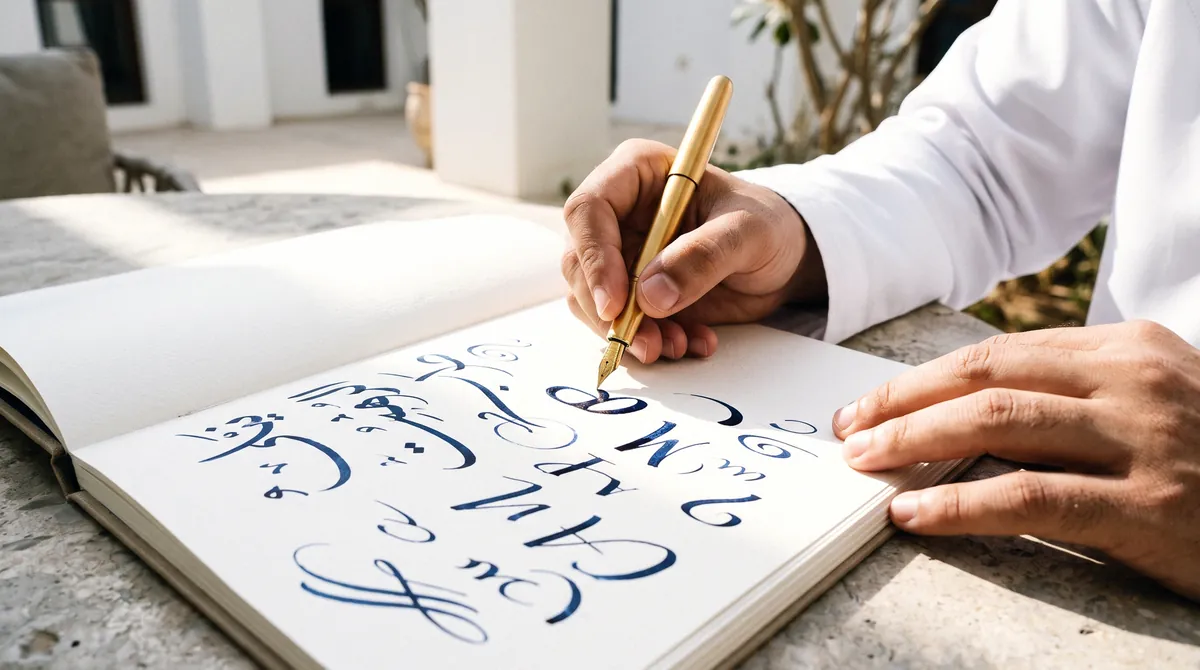
Your company will live in two languages, so decide early how the Arabic and English names relate. You can transliterate one name into both scripts, translate its meaning, or pair two forms that share an idea without sharing sounds. Each route affects spelling consistency, search results and how customers say the name aloud. Settling it before registration spares you a second round of changes later.
Check two: can you secure the matching .com?
Customers will type your name into a browser, usually on a phone, and most will assume the address ends in .com. If someone else holds it, every mistyped search and every half-remembered email address sends attention elsewhere.
Look up the exact match first, then the obvious variants. If an active business already uses the exact .com, that is usually a signal to keep looking for a name rather than compromise on the address. If the domain is parked or listed for sale, find out the asking price before you become attached to the name. Country domains such as .om have their own eligibility rules, which makes them a useful addition to the .com and a weak substitute for it.
Check three: is the handle free on every platform?
One consistent username across Instagram, X, LinkedIn, TikTok, Snapchat, Facebook and YouTube makes a new brand easy to find and harder to imitate. A different handle on each platform does the opposite. It looks improvised, and it gives copycat accounts room to appear.
- Check the exact handle on every platform you plan to use within the first year, including the ones you will not use this month
- Note character limits, since a handle that fits one platform may be too long for another
- Avoid handles that only work with "official", "om" or numbers added, if a cleaner option exists
- Reserve the handles on the day you decide, because availability changes quickly
Check four: does it conflict with an existing brand?
This is the check founders skip most often, and the one with the largest downside. A business trading under a name close to a registered mark can face objections, demands to stop using the name, or a forced rebrand after it has already paid for signage, packaging and a website.
Search the trademark register in the classes that cover your goods and services, then widen the search to the Gulf markets you may enter later. Look past exact matches to similar spellings, sounds and meanings in both Arabic and English. A search reveals signals of risk. A formal clearance opinion, and any trademark filing, should come from a licensed intellectual property practitioner.
Test the name with people, not only systems
A name can clear all four checks and still struggle in the market. Before you commit, try it on a handful of people who resemble your future customers.
- Can they pronounce it correctly after hearing it once, in both languages?
- Can they spell it after hearing it on a call or in a voice note?
- Does it carry an unintended meaning in Arabic, English or a dialect your customers speak?
- Will it still fit if the business adds an activity or enters another Gulf market?
A practical order of work
Sequence matters, because each check can eliminate a candidate. Working in this order keeps you from paying for assets tied to a name you later drop.
- Develop a shortlist of five to eight candidates in Arabic and English
- Screen each one against the register criteria and remove the weak ones
- Check the .com and the handles for the names that survive
- Run a conflicting-mark search on the final two or three
- Test the leading name with real people
- Secure the domain and handles, then instruct a licensed lawyer or sanad office to register
Keep a written record of every check, with dates and screenshots. If a question comes up later, evidence of the care you took is worth having close at hand.
Where professional screening fits
None of these checks is complicated on its own. The difficulty lies in completing all four, in the right order, before the excitement of a good name pushes you into spending money on it.
That discipline is the basis of GBN's Four-Lock Name Check, which tests every shortlisted name against the register, the .com, the handles and conflicting brands, and documents the evidence before a client commits. If a name cleared through all four locks is later rejected at commercial registration, GBN repeats the naming and screening process at no additional cost. Formal clearance opinions stay with licensed practitioners in GBN's Partner Network.
If you already have a name in mind, a short diagnostic conversation with GBN is a practical way to learn whether it will hold.
Talk it through with GBN
A free diagnostic call shows you the structure, the timeline and the real cost of launching your company.
Keep reading

Building One Brand Identity in Two Languages
How to make the Arabic and English sides of a brand look, read and behave as one identity, from logotype to brand book.

Choosing the Right Domain Before You Register
The matching .com, sensible alternatives and who holds the registration: what to settle before your name is fixed.

The Real Cost of Launching a Company in Oman
An indicative, line-by-line budget for the name, identity, domain, site and documents, plus the costs founders forget.